
A Better Form Field Validation Than OnBlur
UX design for faster input corrections
Imagine filling out a form and making a small typo in your email address. As you type, nothing seems wrong—until you move to the next field. Suddenly, an error message flashes, but now you have to click back into the previous field just to fix it. This extra effort disrupts your workflow and makes every error feel twice as frustrating.
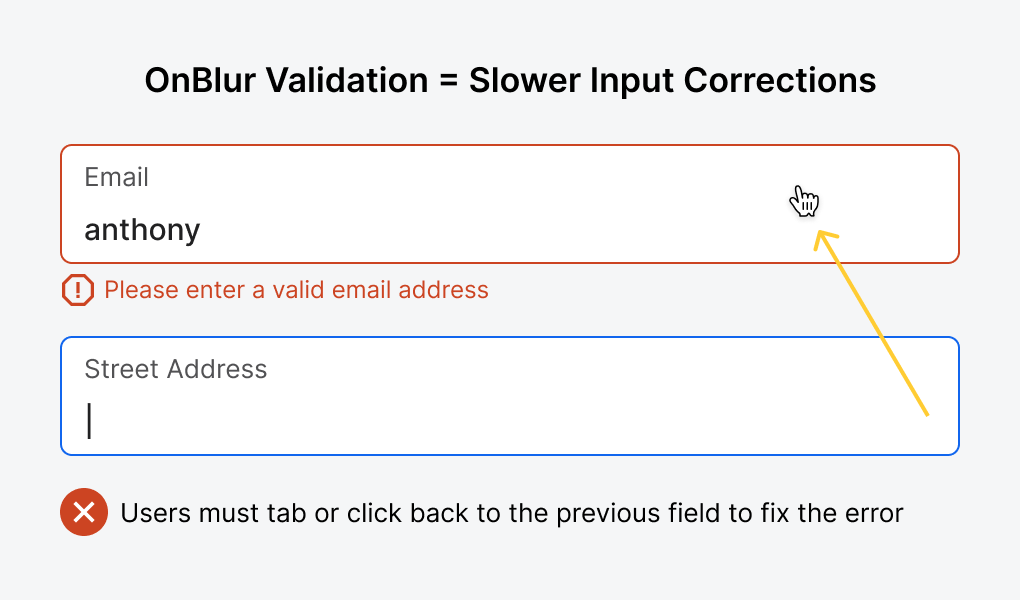
OnBlur events are still the default validation trigger on many forms today. However, this pattern is needlessly and surprisingly inefficient. The form only checks for errors when users leave a field. The benefit of this is that it ensures users have finished typing their input. However, the downside is that it forces a slow and awkward interaction where users have to click back to correct the error.
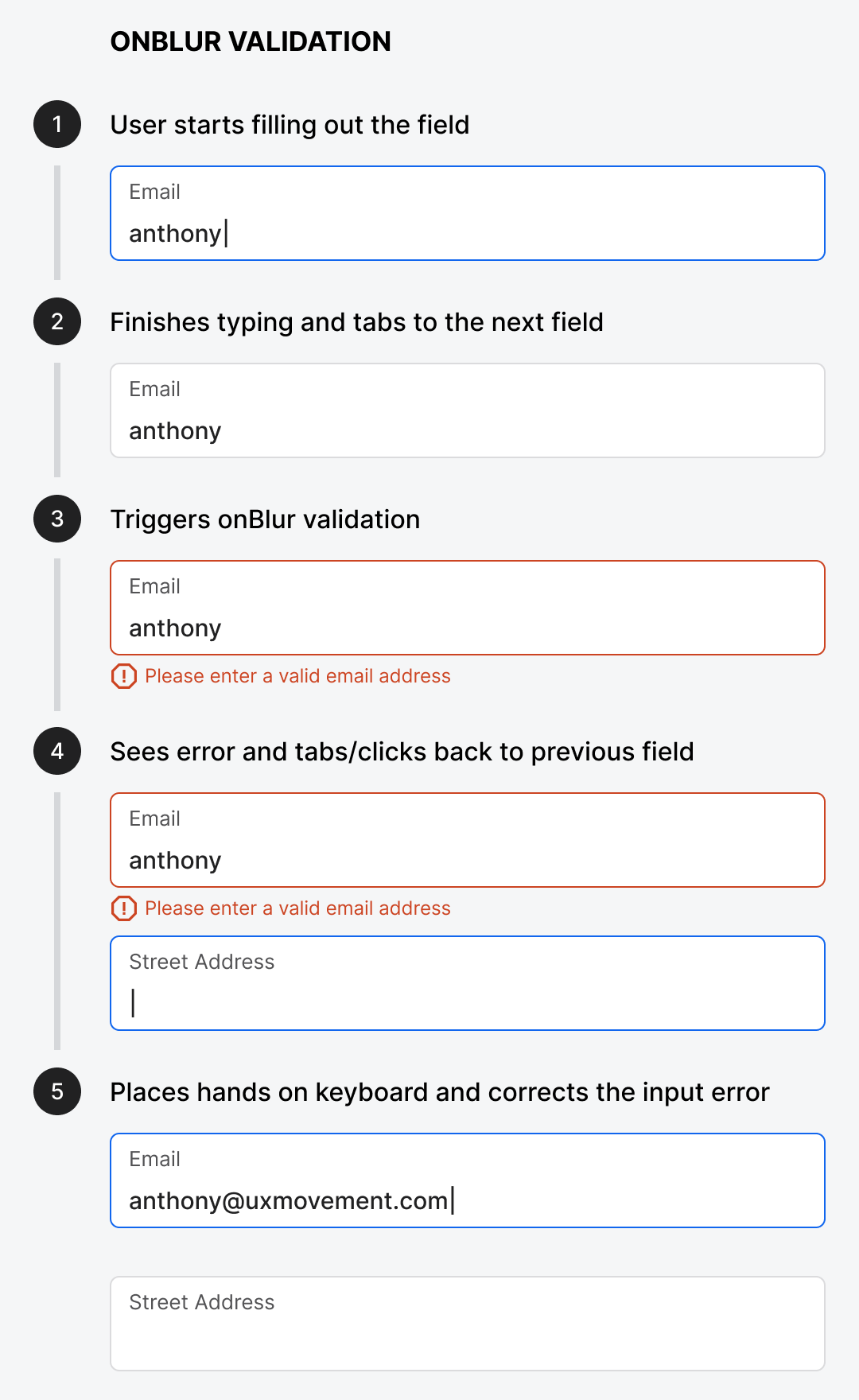
Tech-savvy users will know to use keyboard shortcuts to tab back, but less tech-savvy users will switch their hands from keyboard to mouse to click the previous field. Not only that, but when they move their hands back to the keyboard, they have to put them in home row position, which adds more time to the task.
A more ideal moment to validate input is right after users have finished typing—not after they leave a field. Validation should be intelligent and prompt enough to give helpful feedback before they shift their focus away and move on.
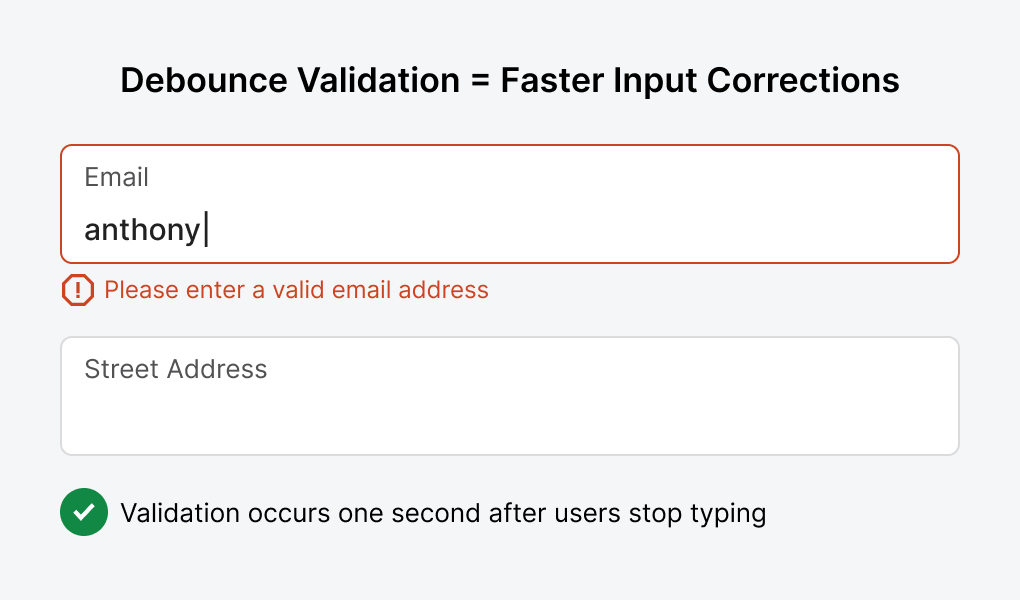
The superior approach is delay-based validation: validate with a debounce timer only when the user pauses for 1 second after typing. Debounced validation delays the execution of validation logic until a specific time period of inactivity has passed.
Learn the implementation:
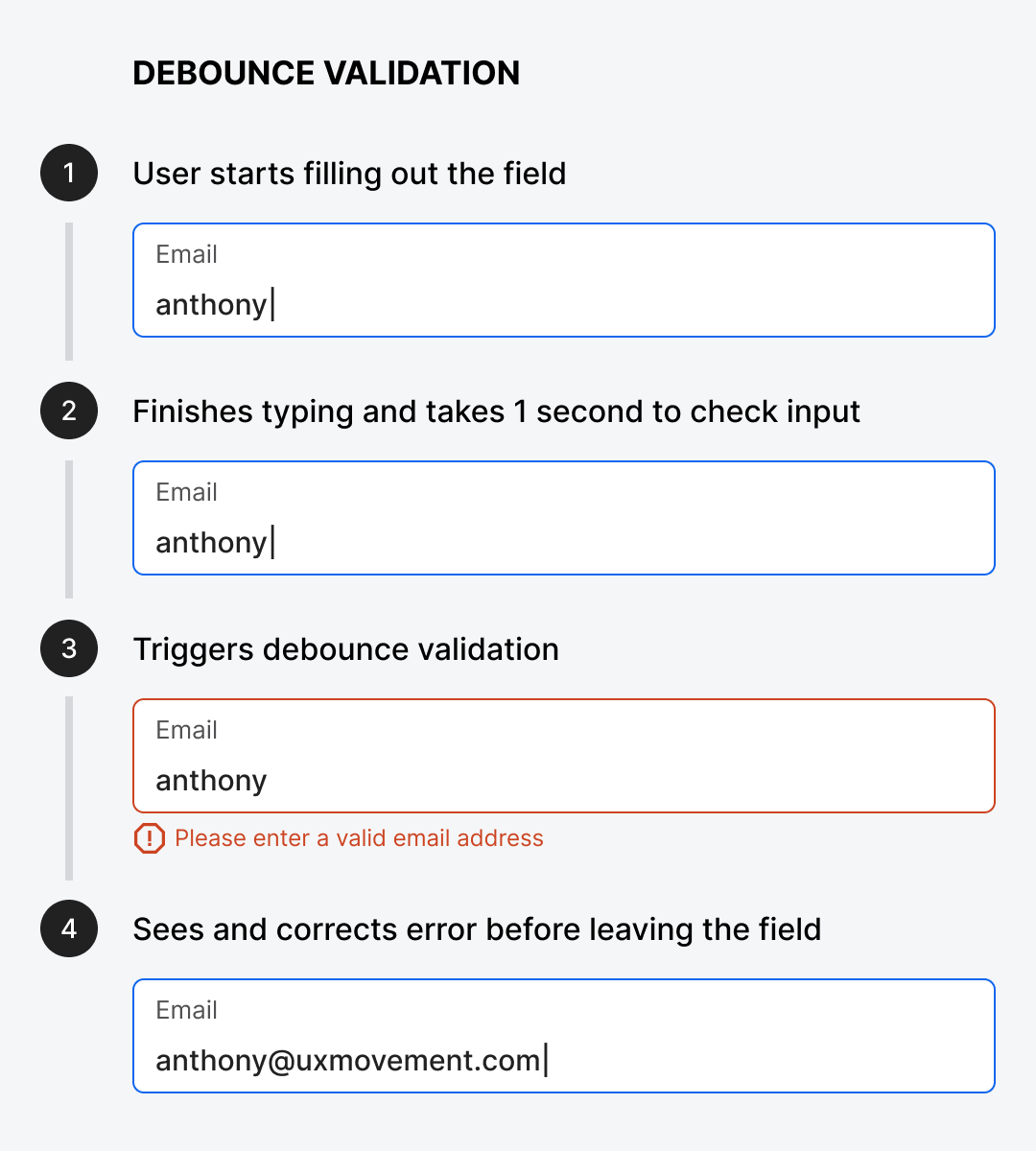
Most users will pause for at least 1 second after entering their input. During this second, they're checking over their input to ensure it's correct. It's only after this second that they usually move to the next field. You can take advantage of this moment to validate their input so they can correct any errors before tabbing away.
With debounced validation, input corrections are faster, local, and require no field hopping. Users can see and resolve errors as soon as they finish entering their input, without breaking their typing flow.
The current practice of onBlur validation is widespread because a field losing focus usually signals user completion. However, it also causes considerable friction because it requires users to retrace their steps to correct mistakes when their mental focus has shifted away from a completed field.
Therefore, it's best to use onBlur validation in tandem with the debounce function. Some users are fast typers who might not wait a second before tabbing to the next field. For them, onBlur will trigger the validation that debounce may not catch.
Reducing the workload of filling out forms directly translates into a faster and friendlier experience. To help users correct input errors more easily, you should start using debounce with onBlur validation.
No longer should they have to click back to fix an input error. Instead, validation should occur the moment they truly finish typing, for a smooth and seamless interaction.

One downside of this approach if not implemented properly is as soon as the user tabs/clicks to a field they are immediately presented with an error. So you need to make sure at least one character is entered right? Thx